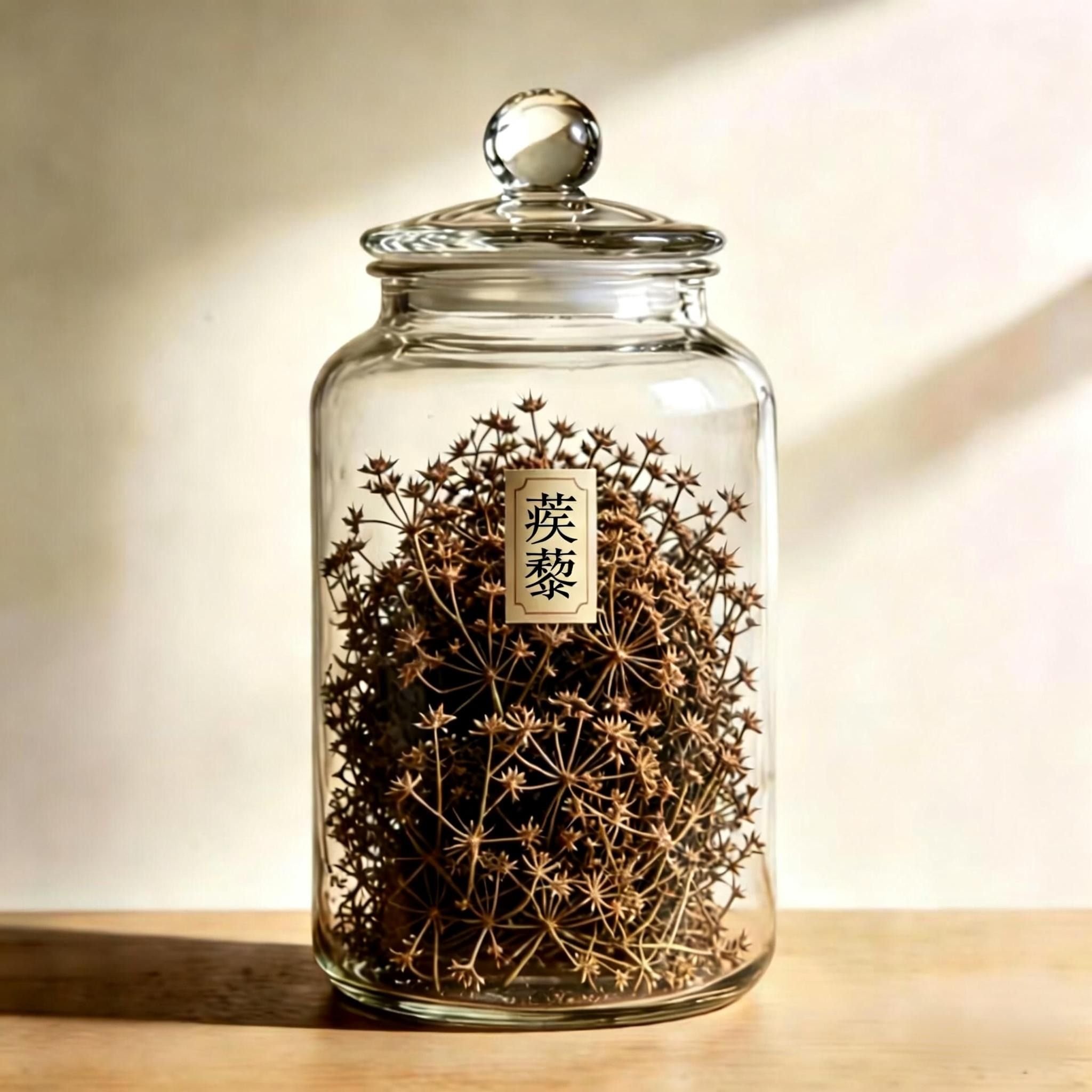
Puncturevine Calthrop Fruit
蒺藜
Liver-Calming and Wind-Extinguishing Herbs

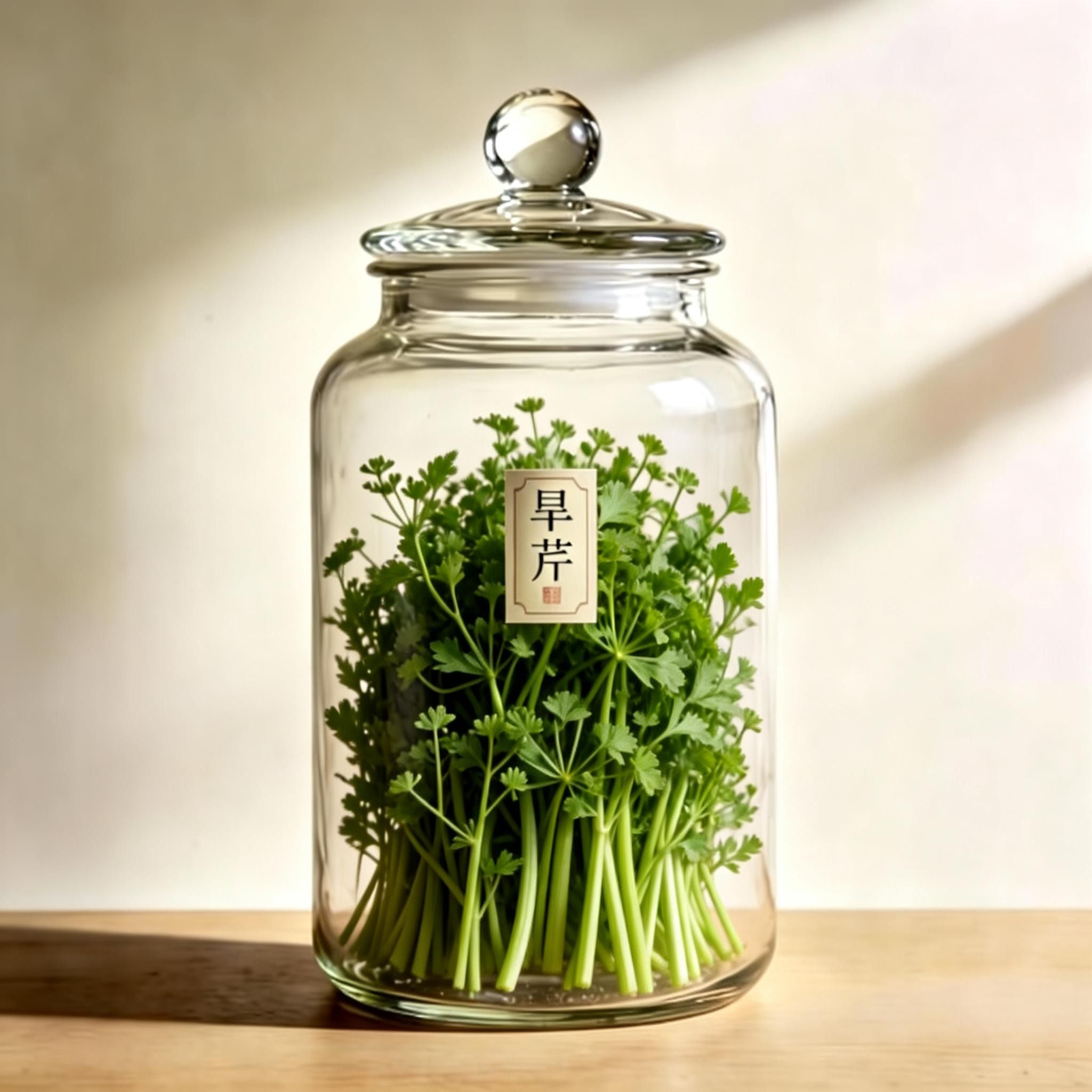
Celery, Fragrant Celery, Cattail Celery, Medicinal Celery, etc.
Cool; Sweet, Bitter
The stems and leaves contain volatile oil, apilin, bergapten, organic acids, carotene, vitamin C, sugars, etc. The volatile oil contains α-selinene and the phthalide derivatives that give celery its characteristic odor—butylphthalide, neocnidilide, sedanenolide, etc.
1. Hypotensive effect: Crude celery extract, given intravenously to rabbits and dogs, has a marked hypotensive effect; vascular perfusion causes vasodilation; by the aortic-arch perfusion method it antagonizes the pressor responses induced by nicotine and lobeline, and can also cause hypotension, so its hypotensive principle is considered to be mainly via the aortic-arch chemoreceptors. 2. Central effect: An alkaline component isolated from celery seeds has a sedative effect on animals and potentiates the anesthesia of pentobarbital; experiments using conditioned avoidance response and reduction of amphetamine-induced mortality in group-housed mice show this alkaloid has a tranquilizing effect; maximal electroshock seizure and pentylenetetrazole seizure-threshold tests show anticonvulsant activity with low toxicity. Apilin or apigenin orally antagonizes cocaine-induced excitation in mice. 3. Effect on the uterus: Celery seed extract contracts both pregnant and non-pregnant uterus and may be used for dysmenorrhea, but the effect is questionable. A decoction of fresh leaves accelerates the fermentation rate of baker's yeast, which was once used to test the antianemic potency of liver extract, so whether celery also has a liver-extract-like effect needs further study. Tablets made from the processed pressed juice of the whole herb have a diuretic effect in dogs.
No precautions information available
NOTE: THE INFORMATION PROVIDE IS FOR EDUCATIONAL PURPOSES
ONLY AND IS NOT INTENDED AS MEDICAL ADVICE.